

Tony’s Fencing & Iron Works Publishes Louisiana Shared Fence Planning Guide
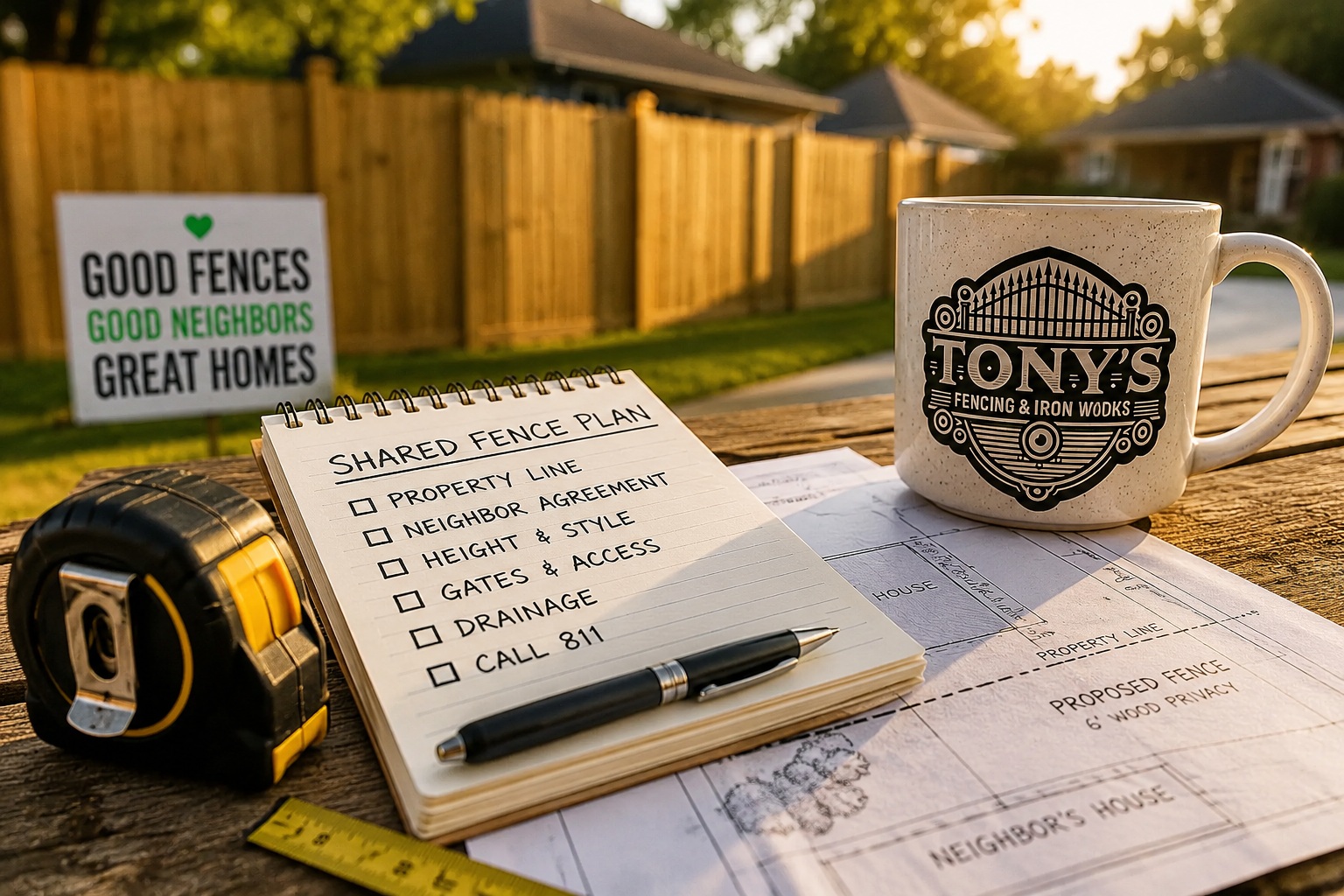
A little fence planning now can help neighbors avoid property-line, drainage, and access headaches later.
New educational guide helps Louisiana homeowners plan fence projects with property lines, drainage, utilities, materials, gates, & neighbor communication.
COVINGTON, LA, UNITED STATES, June 29, 2026 /EINPresswire.com/ -- **New resource explains how homeowners can approach property-line fencing, neighbor communication, drainage, utilities, materials, maintenance, and common fence questions before construction begins.**
Tony’s Fencing & Iron Works has released a new educational article designed to help Louisiana homeowners better understand the planning involved when building a fence near or along a shared property line.
The new guide, titled “Shared Fence With a Neighbor in Louisiana: What Homeowners Should Know,” provides practical information for homeowners considering a backyard privacy fence, pet fence, decorative boundary fence, gate, or other fencing project that may affect a neighboring property.
Shared fence questions are common throughout Southeast Louisiana. Homeowners in Covington, Mandeville, Madisonville, Slidell, Hammond, Ponchatoula, and nearby communities often contact fencing contractors after deciding they want more privacy, a safer space for children or pets, a cleaner backyard boundary, or a replacement for an aging fence.
While the finished fence may seem like the main decision, Tony’s Fencing & Iron Works says the planning stage is often the most important part of the project.
A fence that follows a shared property line can raise practical questions about where the boundary is located, whether the neighbor agrees with the layout, who will pay for the work, which side of the fence will face each property, how gates will be placed, and whether drainage or underground utilities could affect the installation.
The new article encourages homeowners to begin with basic preparation rather than rushing into material selection alone.
“Homeowners often call because they are ready for privacy or need to replace an old fence quickly,” said Tony Ostrowski of Tony’s Fencing & Iron Works. “That is understandable, but a few planning conversations before installation can prevent many of the common issues we see later. Property lines, drainage, access, gates, fence height, and neighbor expectations are all worth discussing before the first post goes in.”
The guide explains that an existing fence is not always a reliable indicator of the true property line. Older fences may have been installed inside one owner’s yard, placed for convenience rather than accuracy, or built before a current homeowner purchased the property.
For that reason, homeowners are encouraged to review surveys, property documents, recorded plats, or other reliable boundary information before finalizing a fence layout. In some situations, a property owner may choose to have a survey updated or consult a qualified survey professional when the line is unclear.
According to Tony’s Fencing & Iron Works, confirming the boundary early can help homeowners avoid placing a fence where it may later need to be moved, adjusted, or removed.
The article also discusses the value of neighbor communication. A homeowner may not always be required to obtain a neighbor’s permission to install a fence entirely on their own property, but talking through the project beforehand can help reduce misunderstandings.
Important shared-fence topics can include fence height, material choice, finished-side appearance, location of gates, access during construction, removal of an old fence, and future maintenance.
For example, one homeowner may prefer a traditional wood privacy fence, while another may prefer a lower-maintenance vinyl option or an open-style ornamental fence. When both properties will visually share the fence, discussing the design before ordering materials can help prevent frustration after installation.
The guide explains that cost-sharing should also be discussed clearly. Neighbors sometimes choose to split the cost of a fence when both properties benefit from the project. However, a shared boundary does not automatically mean both homeowners are required to pay for the installation.
Some homeowners pay for the entire project because they want additional privacy, need containment for a pet, are preparing to sell a home, or want to replace a damaged fence. Other neighbors agree to divide costs based on linear footage, material upgrades, or gate locations.
Tony’s Fencing & Iron Works recommends that homeowners discuss the basic financial arrangement before work begins and keep a simple written record of the agreement when both parties are contributing.
The article also highlights the importance of Louisiana weather and soil conditions. Heavy rainfall, humid conditions, drainage swales, ditches, soft soil, and standing water can all affect fence installation decisions.
In parts of Southeast Louisiana, fence lines often run near low areas of a yard, drainage paths, culverts, or ditches. Installing a fence without considering how water moves across the property may create maintenance problems later.
Fence posts need a stable installation plan, especially in areas where soil remains wet after storms. In some cases, a contractor may recommend adjustments to post placement, spacing, fence style, or drainage access to help reduce the risk of leaning, settling, or water flow issues.
The guide also reminds homeowners to call Louisiana 811 before digging. Fence installation often requires digging for posts, gates, and other structural supports. Louisiana 811 helps coordinate utility marking requests so homeowners and contractors can better identify underground lines before excavation begins.
This step is especially important for homeowners who may have buried electrical lines, irrigation systems, cable lines, gas lines, water lines, drainage systems, or other underground utilities near the planned fence route.
Tony’s Fencing & Iron Works offers several fence types that can work well for shared property-line projects depending on the homeowner’s goals.
Wood privacy fencing remains a common option throughout Southeast Louisiana because it can create separation between homes, add visual warmth, block views, and provide a more enclosed backyard environment. Pressure-treated pine and cedar fencing may each appeal to different homeowners depending on budget, appearance, maintenance preferences, and long-term goals.
Vinyl fencing may be preferred by homeowners looking for a clean appearance with lower maintenance requirements. Chain link fencing can remain a practical choice for large yards, pet areas, side yards, commercial spaces, or projects where affordability and visibility are important.
Ornamental iron and aluminum fencing can also be useful in certain shared-boundary situations. These options may work well around pools, front yards, landscaped spaces, and properties where airflow, visibility, security, or an upscale appearance is desired.
Fence height is another major planning issue addressed in the article. Taller fencing may be helpful for privacy, pet containment, or noise reduction. However, local requirements, HOA guidelines, driveway visibility, corner-lot conditions, pool safety needs, and neighborhood aesthetics can influence what height is appropriate.
The article encourages homeowners to verify local fence requirements before installation, particularly when planning front-yard fencing, taller privacy fencing, fencing near a roadway, or fencing around a pool.
Tony’s Fencing & Iron Works also notes that gate placement deserves careful consideration. A shared fence line may require one gate, multiple gates, or no gate at all. Homeowners should think about lawn equipment access, trash can access, utility access, pet movement, pool service access, and emergency access before deciding where gates should go.
A gate that is placed in the wrong location can make future maintenance harder for both households. Planning gate swing direction, latch placement, width, and access needs at the beginning can help avoid costly changes later.
The guide also addresses the “good side” question, which is frequently raised by homeowners planning a wood fence. Many traditional wood privacy fences have a finished side and a structural side. In many neighborhood installations, the finished side may face outward toward the neighbor or public view.
However, some styles such as shadowbox, board-on-board, and custom designs can offer a more attractive appearance from both sides. This may be helpful when two homeowners want a fence that looks balanced from either property.
“Shared fence projects are not one-size-fits-all,” Ostrowski said. “The right solution depends on the property, the homeowner’s goals, the neighbor relationship, drainage, access, and the type of fence being installed. A local estimate gives homeowners a chance to walk through those details before construction starts.”
Tony’s Fencing & Iron Works provides residential and commercial fencing services throughout Southeast Louisiana. The company installs wood fencing, cedar fencing, pine fencing, vinyl fencing, chain link fencing, ornamental iron fencing, aluminum fencing, pool fencing, farm fencing, custom gates, automatic gates, handrails, brick work, and related property improvement solutions.
Homeowners can read the full article, “Shared Fence With a Neighbor in Louisiana: What Homeowners Should Know,” on the Tony’s Fencing & Iron Works website.
For more information or to request a fence estimate, homeowners may contact Tony’s Fencing & Iron Works at (985) 703-0595.
Frequently Asked Questions About Shared Fence Projects in Louisiana
-Do I need to talk to my neighbor before building a fence?
It is usually a good idea to speak with a neighbor before installing a fence near a shared property line. Even when a fence is planned entirely on one homeowner’s property, a conversation can help clarify design preferences, access needs, drainage concerns, and future maintenance expectations.
-Does a neighbor have to pay for half of a fence?
Not automatically. Some neighbors agree to share the cost because both properties benefit from the fence. However, cost-sharing is generally something that should be discussed and agreed upon before materials are ordered or work begins.
-Can I build a fence directly on the property line?
That may depend on the property boundary, local regulations, easements, HOA rules, and agreements between neighbors. Homeowners should confirm the property line before deciding where the fence will be installed.
-What if the old fence is not on the property line?
An old fence may not accurately show the true property boundary. It could have been installed inside one yard, placed around landscaping, or built by a previous owner. Reviewing surveys or property documents can help clarify the situation.
-Should I get a survey before building a fence?
A survey can be helpful when property lines are unclear, when an old fence is in question, when the lot has unusual dimensions, or when the planned fence will be installed very close to the boundary. Homeowners should consider their specific property conditions before making a decision.
-What is the best fence type for shared backyard privacy?
Wood privacy fencing is a popular option for shared backyard boundaries because it can block views and create a more private outdoor space. Vinyl fencing can also provide privacy with lower maintenance, while certain custom wood styles may offer a finished appearance on both sides.
-What fence works best for pets?
The best pet fence depends on the size and behavior of the pet, the layout of the property, and the homeowner’s goals. Wood privacy fencing, vinyl fencing, chain link fencing, and aluminum fencing may all be appropriate depending on the situation.
-Why does drainage matter when installing a fence?
Drainage affects soil stability and water flow. In Louisiana, heavy rain and soft ground can make fence planning more important. A fence installed near a swale, ditch, or low area may need special attention so water can continue moving properly.
-Should I call Louisiana 811 before installing fence posts?
Yes. Louisiana 811 should be contacted before digging for fence posts, gates, or other excavation work. Utility marking helps reduce the risk of damaging underground lines.
-Can a fence block drainage between properties?
It can, depending on the fence type, placement, and the way water moves across the property. Homeowners should discuss drainage conditions with a contractor before installation, especially in low-lying areas or yards that collect water after storms.
-Who is responsible for maintaining a shared fence?
That depends on ownership, placement, and any agreement made between neighbors. It is helpful to discuss maintenance expectations before installation, including staining, repairs, cleaning, trimming vegetation, and future replacement.
-Can I install a gate in a shared fence?
Yes, but gate placement should be planned carefully. Homeowners should consider access for lawn equipment, trash cans, pets, service providers, pool maintenance, utility work, and emergency situations.
-What is the “good side” of a fence?
The “good side” is usually the finished side of a fence, while the opposite side may show rails or structural supports. Some fence styles, including shadowbox and board-on-board designs, can offer a more finished appearance from both sides.
-Do I need a permit for a fence in Louisiana?
Permit requirements can vary by parish, municipality, neighborhood, HOA, fence height, location, and fence type. Homeowners should check current local requirements before beginning installation.
-Can Tony’s Fencing & Iron Works help with fence planning?
Yes. Tony’s Fencing & Iron Works can evaluate the property, discuss fence options, help identify practical concerns, and provide an estimate for residential or commercial fencing projects throughout Southeast Louisiana.
About Tony’s Fencing & Iron Works
Tony’s Fencing & Iron Works provides custom fencing, gates, iron work, handrails, brick work, and related property improvement services for homeowners and businesses throughout Southeast Louisiana. The company serves Ponchatoula, Hammond, Covington, Mandeville, Madisonville, Slidell, and surrounding communities.
Media Contact
Tony’s Fencing & Iron Works
Phone: (985) 703-0595
Email: ostrowski1809@gmail.com
Website: https://tonysfencingandiron.com/
Gwen M.
Designs For You
email us here
Visit us on social media:
Facebook
Legal Disclaimer:
EIN Presswire provides this news content "as is" without warranty of any kind. We do not accept any responsibility or liability for the accuracy, content, images, videos, licenses, completeness, legality, or reliability of the information contained in this article. If you have any complaints or copyright issues related to this article, kindly contact the author above.
